
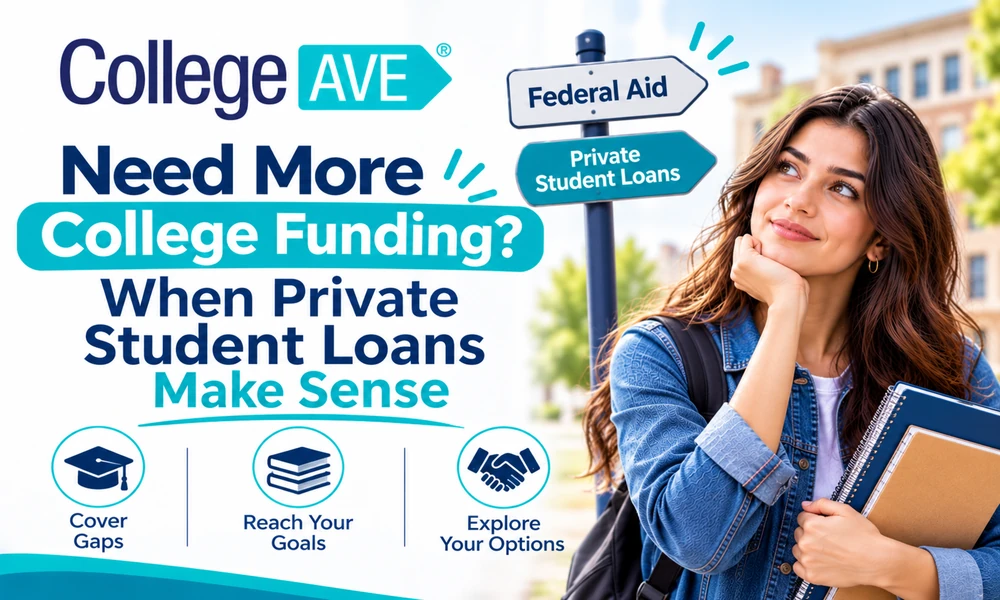
The total cost of going to college includes other expenses besides just the tuition. These other expenses include room and board (housing), textbooks, transportation costs, and various other student fees. While most students are able to pay for many of these additional expenses through federal financial assistance, many students have a “funding gap” which is the difference between what they need to attend college and what they receive in federal financial aid. When a student has a funding gap, he/she/they should consider obtaining a private loan to help fill the void. To do so, however, the student needs to determine if it is in his/her/their best interest to borrow additional funds.
Start with Federal Aid First
When seeking to fund your educational expenses, you should consider federal student loans as your first choice. Federal student loans typically feature a fixed interest rate, flexible repayment options, and borrower protections. Additionally, some borrowers may be able to take advantage of loan forgiveness programs.
Before searching for other sources of funding, make sure to consider all possible funding opportunities such as grants, scholarships, personal savings and any federal student aid that you can access. All of these options may lower the total amount of money that you will have to borrow.
When Should You Consider Private Loans?
Understanding when to consider private student loans after federal aid is something that will allow you to make a more educated decision. Private loans can be used as an alternative to federal loans in the following situations:
- Your federal aid does not cover all approved education costs.
- You have compared other funding options.
- You can manage the expected monthly payments.
- You qualify for a competitive interest rate.
Compare the Costs Before Applying
Private lenders determine their own interest rates, costs, and qualification requirements. The amount of money you earn and your credit score can influence the type of loan offer that is made to you. Additionally, having a co-signer can assist in qualifying for more favorable terms on a loan.
Compare fixed versus variable interest rates, repayment times, and overall cost of interest. Do not select a loan based solely on the lowest introductory rate.
Borrow Only What You Need
If you take on additional debt after you graduate it will be more difficult for you to pay off your private student loans. It is important to look at the terms of your private student loans and use a loan calculator so that you have an idea what your monthly payment amounts will be.
Make Your Funding Decision Carefully
Private loans may provide the funds to cover a financial shortfall, however, this should be considered an alternative to other options. When considering all available funding alternatives, it is important to only take out a loan for an amount that you believe will allow you to make timely payments.