
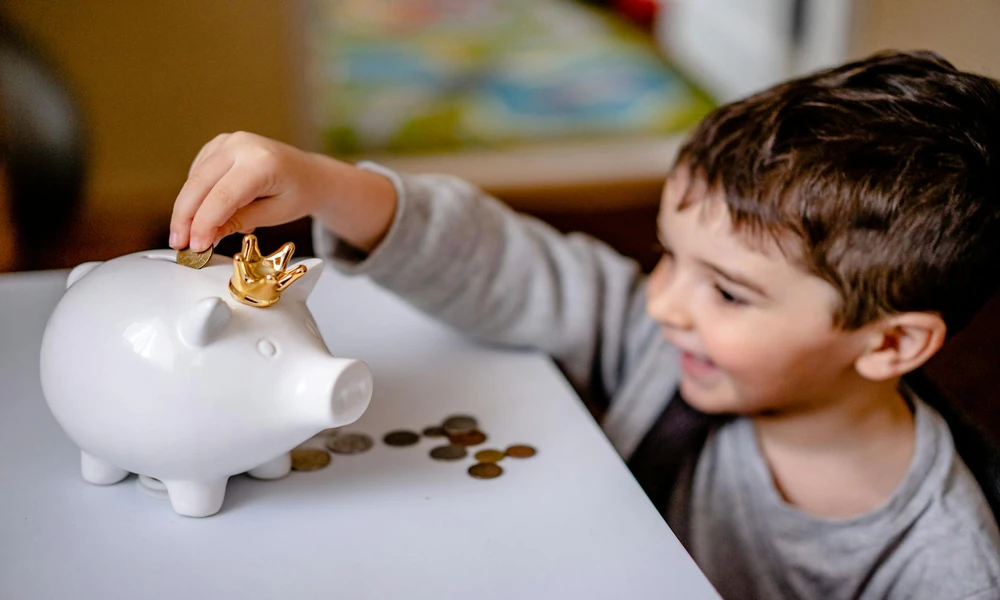
Money is part of everyday life, yet it is a subject many of us were never formally taught as children. The result is that a great many adults reach maturity without the confidence or knowledge to manage their finances well. Teaching children about money from an early age gives them a head start that can benefit them for the rest of their lives, and it is far simpler to do than many parents imagine.
Young children can begin to grasp the basics through everyday experiences. Allowing a child to hand over coins at a shop, count change or save up for something they want introduces fundamental concepts in a natural and concrete way. These small, real-life lessons teach children that money has value, that it is finite and that choices have to be made about how it is spent.
Pocket money can be a wonderful teaching tool. When children have a small amount of money of their own to manage, they quickly learn lessons that no lecture could provide. Deciding whether to spend now or save for something bigger, and occasionally feeling the disappointment of running out, teaches budgeting and patience in a way that genuinely sticks.
The Best Independent Primary Schools in Hertfordshire explore this further below.
Teaching the difference between wants and needs is another valuable early lesson. Helping children recognise that some things are essential while others are simply nice to have lays the groundwork for sensible decision-making later in life. Conversations about why a family chooses to spend money on certain things and save for others help children understand that money is a tool to be used thoughtfully. Schools such as St Hilda’s School recognise that life skills like these are an important part of a rounded education.
Young children can begin to grasp the basics through everyday experiences.
As children grow older, the lessons can grow with them. Older children can learn about earning money, the basics of saving and even simple ideas about how bank accounts and interest work. Involving them in age-appropriate family discussions about money, within sensible limits, demystifies a subject that can otherwise feel intimidating and grown-up.
Perhaps the most important thing is to talk about money openly and without anxiety. When money is treated as a normal, manageable part of life rather than a source of stress or secrecy, children grow up with a healthy attitude towards it. Modelling sensible habits, such as saving, comparing prices and avoiding impulsive purchases, teaches children far more than words alone.
Financial confidence is a gift that keeps giving. A child who learns to value, manage and respect money grows into an adult far better equipped to navigate the financial realities of life. More on nurturing capable, well-rounded children can be found at https://www.sthildasharpenden.co.uk/.